| Semester | 5 |
| Dauer | 1 Semester |
| Art | Pflichtfach |
| ECTS-Punkte | 5 |
| Studentische Arbeitsbelastung | 60 h Kontaktzeit + 90 h Selbststudium |
| Empf. Voraussetzungen | HNP |
| Verwendbarkeit | BaE, BaEP, BaI |
| Prüfungsform und -dauer | mündliche Prüfung |
| Lehr- und Lernmethoden | Vorlesung, Praktikum |
| Modulverantwortlicher | A. W. Colombo |
- Dozent/in: Armando Walter Colombo
- Dozent/in: Jeffrey Wermann
Rationale of the Course:
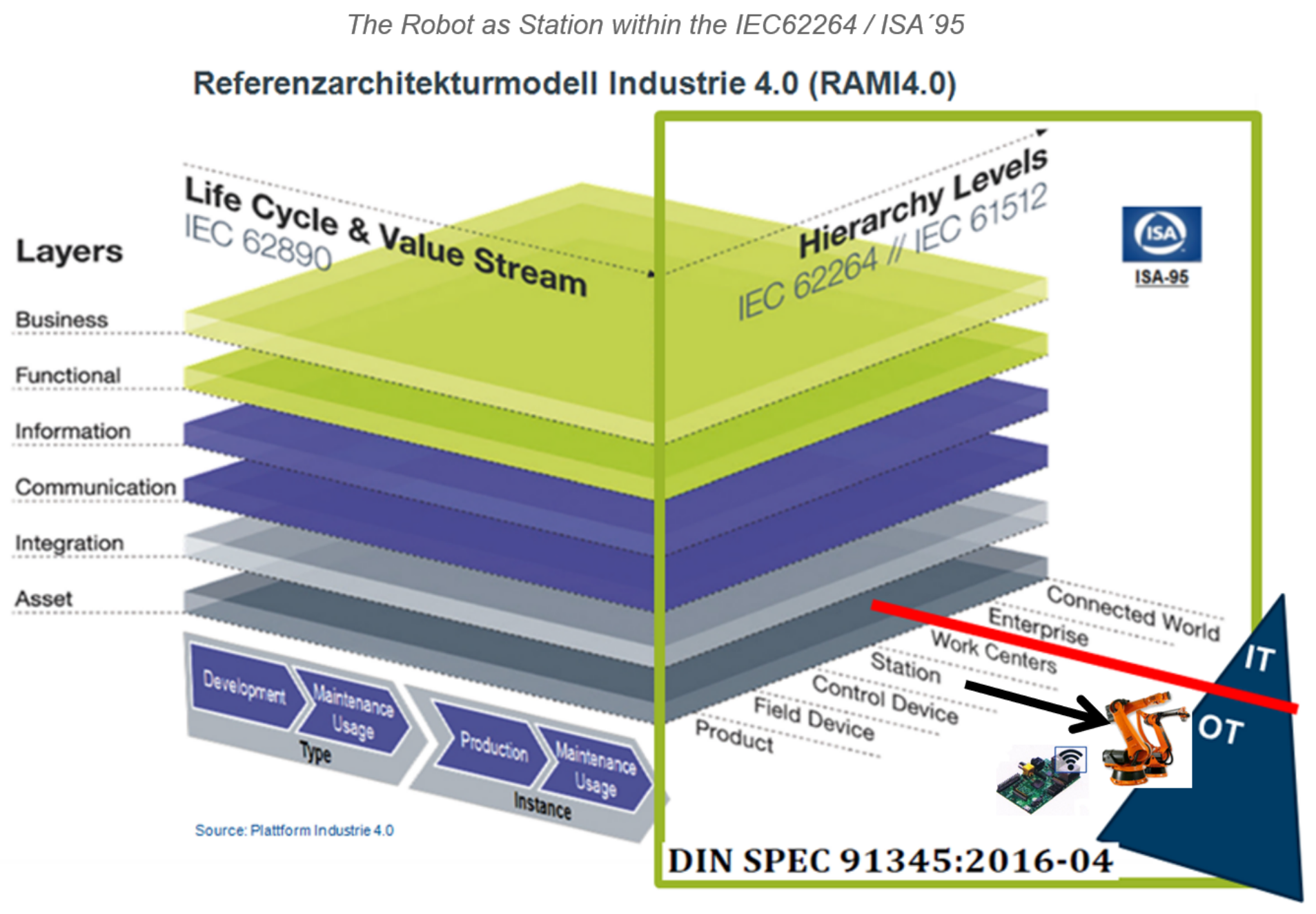
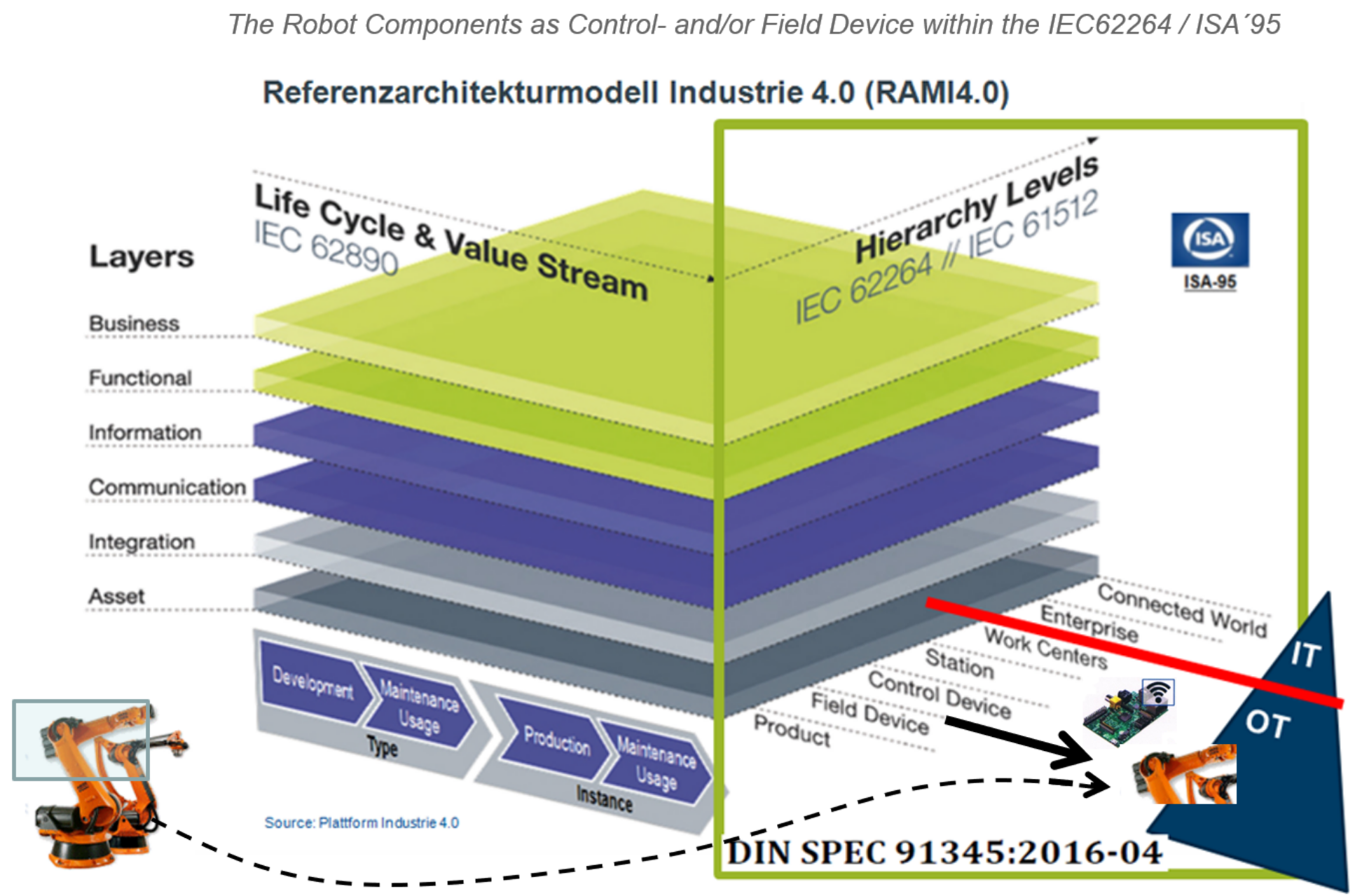
The contents of the Module are oriented to introduce the students of the Master on Industrial Informatics into the Industrial Robotics Systems, positioning them within an Automatized and/or Digitalized and Networked Industrial Environment. The Robot as an Industrial Cyber-Physical System, as a Thing within an Industrial-Internet-of-Things compliant environment, as a Service-oriented Component/System within a RAMI 4.0 compliant eco-system.
Major topics to be learned are:
- The
Robot: An ICPS consisting of a System of Systems.
- The Robot: Working with Coordinate Systems and Coordinate Transformations.
- Major structural and functional requirements for Industrial Robotics Systems.
- The Robot: An ICPS with very specific Requirements for working.
- Industrial Robots (inside): Robot´s Structure, Workspace, Energy Source, Robot Control (RC).
- Introduction to Robot Kinematics.
- Introduction to Robot Dynamics.
- The Robot: An ICPS consisting of an INTERNAL System of Systems.
- The Robot Control performs the Coordinate Transformation and generates the movements.
- The Robot: An ICP Component integrated into a System-of-ICPS:
(i) View from the RAMI4.0-Perspective;
(ii) The Robot as a “Digitalized Asset” within an Enterprise Architecture.
- Industrial Robotic Systems: Grippers / Gripping methods.
- Industrial Robotic Systems: Drive Systems.
- Robotics Systems: Main Industrial Applications.
- Robotics Systems: Other Application Domains.
- Introduction to the "Strategic Research Innovation and Deployment Agenda for Robotics (https://www.eu-robotics.net/eurobotics)".
- Introduction to ROS (Robotics Operating Systems) and Industrial ROS: ROSIN, RobMoSys, Micro-ROS.
- Dozent/in: Armando Walter Colombo
Rationale of the Course:
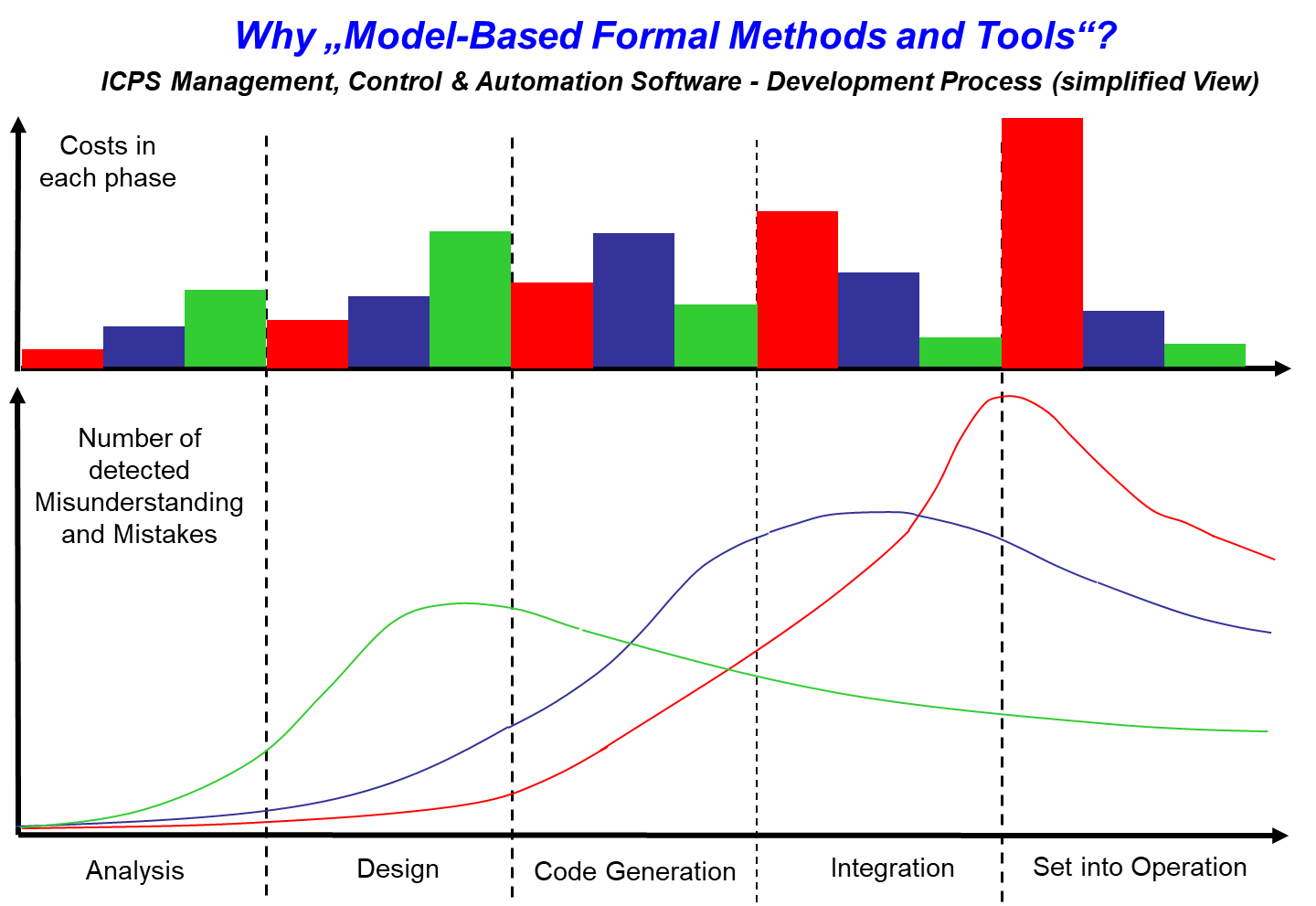
Participants of this course will learn how to use formal methods throughout the entire life cycle of Industrial Cyber-Physical Systems (ICPSs). Relevant technical-proved / scientific-proved formal methods and tools will be learned by applying them to real-world industrial ICPS case studies.
The following methods and tools are covered: the Queue Theory, the High-level Petri Net Theory, and Functional Analysis.
It will be learned how these methods and tools can be used (i) for modeling, (ii) for performing qualitative and quantitative analysis, (iii) for doing validation of ICPS-Specifications, (iv) for synthesizing ICPS, as well as (v) for prototype implementation of ICPS.
- Dozent/in: Armando Walter Colombo
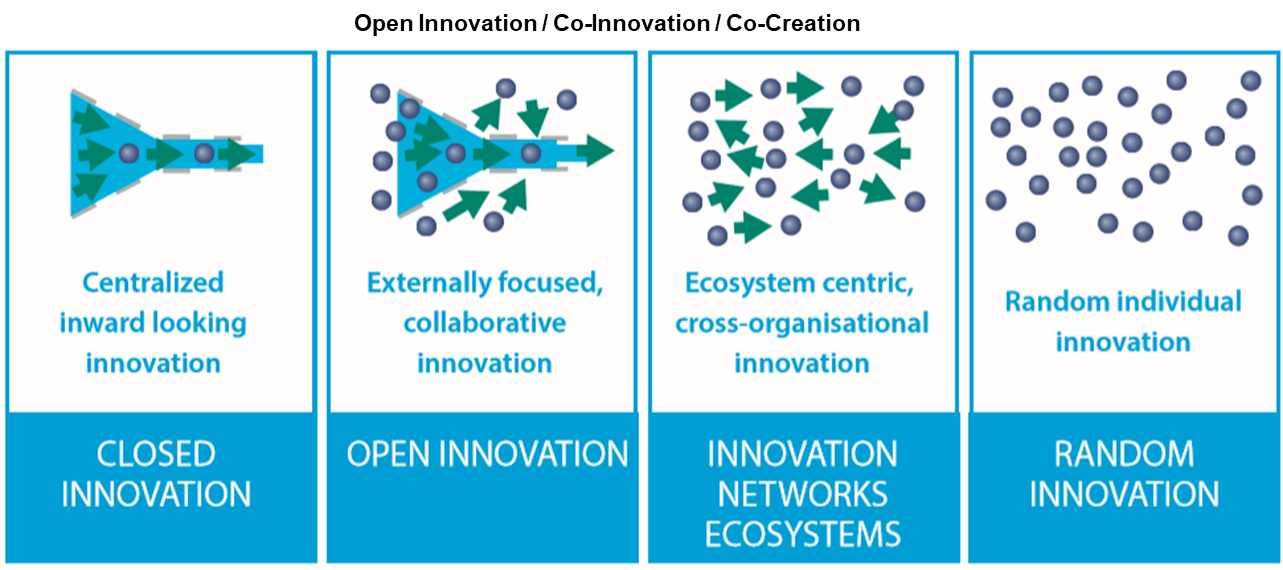

Rationale of the Course:
The topics of this course are closed related to relationships and dependencies between digital technology, digital economy and organizational digitalization, and their impact on the economy, society, organizations and individuals.
Innovation Management deals with aspects like creative problem solving and innovation idea generation, using key features of the Open Innovation Paradigm (OI2.0), learning how to cross the "Valley of Death between Research and Innovation, the application of different innovation models based on extensive networking and co-creative collaboration between all actors in society, Industrial patent processes (innovation and patentability, the use of patent office databases, validation of 'patentability' and 'innovation aspects'), new business models related to IoT and IoS paradigms, application of Service Level Agreements to Innovation Processes, Intellectual Property Rights (IPR-Management), and Risk Management, Technology Readiness Levels (TRLs) and innovation capabilities, understanding, and management of the process of generating research and innovation actions.